

 Call
Call Email
Email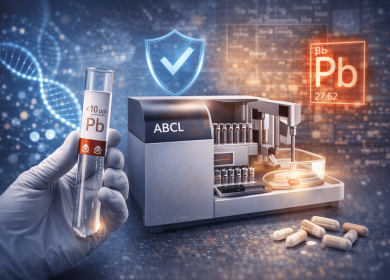
ABCL Heavy Metals Testing &l...
ABCL maintains pharmaceutical-grade purity through rigorous heavy metals testing...

Leading collagen peptide producers from around the world, united through prominent and respected regional associations such as GMIA (Gelatin Manufacturers Institute of America), GME, GMAP, and SAGMA, all operating collaboratively under the authoritative global GROW (Gelatin Representatives of the World) umbrella organization, firmly and unequivocally reaffirm the exceptional safety profile, rigorous purity standards, and uncompromising quality benchmarks that define collagen peptides as a trusted ingredient category. This strong, unified collective statement has been issued in direct and timely response to a recent white paper released by the Clean Label Project, which has sparked industry-wide discussion. GROW not only actively welcomes constructive and open dialogue with the organization to foster mutual understanding but also decisively points out significant methodological shortcomings, key analytical limitations, and areas lacking scientific rigor in the report—specifically titled "The true content and faces behind America's best-selling collagen"—to ensure stakeholders have a complete and balanced perspective.
Rigorous Safety Standards Upheld
Association members consistently prioritize consumer health and safety above all else, implementing comprehensive end-to-end compliance protocols throughout their operations. Production processes adhere meticulously to stringent international regulations, including the comprehensive framework of EC No. 853/2004, which meticulously governs every stage—from the initial intake and verification of raw materials right through to the final release and certification of finished products for market distribution. Independent testing programs are rigorously designed and executed in full alignment with globally recognized compendial standards and regulatory benchmarks, encompassing the FDA Food Chemicals Codex (FCC 10th Edition), detailed EU requirements outlined under both 853/2004 and 1881/2006, as well as relevant regional standards specifically addressing contaminants—to thoroughly verify product identity, exceptional purity levels, and unwavering safety assurances for end users. Raw materials derived from porcine, bovine, and fish sources are exclusively procured from fully registered and audited slaughterhouses, where veterinary professionals provide formal certification explicitly confirming their complete fitness and suitability for human consumption at every step. Furthermore, collagen peptides maintain established GRAS (Generally Recognized as Safe) status as affirmed by the U.S. FDA, while receiving robust endorsements for safety from authoritative international bodies in public health and scientific risk evaluation; notable examples include detailed EFSA assessments evaluating potential risks associated with ruminant collagen and gelatine when derived strictly from animals verified fit for human consumption. Collectively, these multifaceted measures ensure the delivery of fully traceable, rigorously verified, and demonstrably safe collagen peptides that reliably provide their intended full spectrum of health benefits across diverse applications in foods, beverages, and nutritional supplements.
Addressing Heavy Metals Context
Heavy metals are ubiquitous naturally occurring elements found extensively in environmental sources such as air, water, soil, and even marine ecosystems, meaning they appear at trace levels across virtually all categories of everyday foods, from grains and vegetables to seafood and proteins. Established regulatory limits worldwide are deliberately calibrated far above the extremely low typical measurable background levels encountered in practice, thereby providing robust, scientifically validated protection for consumer health without undue restriction. Leading producers not only consistently achieve but routinely surpass these established safety thresholds through proactive monitoring and advanced purification technologies.
Critique of Clean Label Project Methodology
The Clean Label Project white paper specifically analyzed a limited selection of just 28 multi-ingredient retail products available on the market, rather than conducting tests on pure, isolated collagen peptide ingredients themselves as standalone substances. Consequently, any conclusions or findings drawn from this approach inherently pertain to the characteristics of those complex finished consumer goods, and cannot be reliably extrapolated or applied to evaluate the intrinsic safety or purity of collagen peptides in isolation. The Natural Products Association has publicly characterized the report as an example of "fearmongering and misinformation," sharply criticizing aspects such as undisclosed funding sources from donors, the absence of independent peer-reviewed validation for its analytical methods, and a general lack of complete transparency in its overall execution and reporting. GROW steadfastly upholds the proven, long-standing safety record of collagen peptides across the industry, while extending a genuine invitation for constructive dialogue with stakeholders to promote accurate, science-based information that empowers consumers to make fully informed choices with confidence.
Latest Innovations and Insights in Gelatin & Collagen – Empowering Your Industry Knowledge.
ABCL Heavy Metals Testing &l...
ABCL maintains pharmaceutical-grade purity through rigorous heavy metals testing...

The Revival of Gelatin in Mo...
Gelatin-based dishes are returning to kitchens with renewed purpose and creativi...

Industry Confirms Collagen P...
Leading collagen peptide producers from around the world, united through promine...

Grow Defended Flawed Collage...
The Gelatin Research Optimization Working group (GROW), representing global gela...
GROW Study: Gelatin's Unriva...
A landmark international survey conducted by the Gelatin Research Optimization W...


 Read More